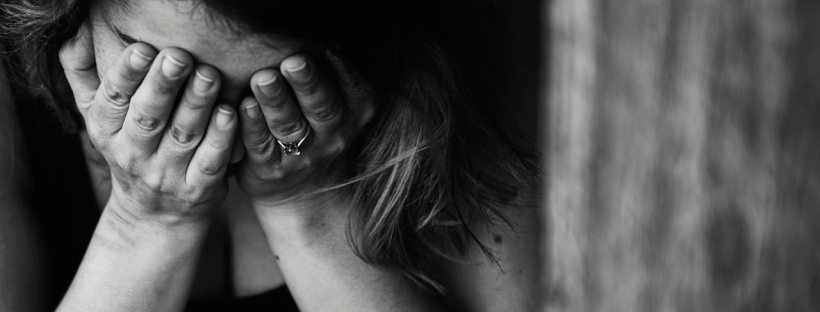
After giving birth, 1 in 7 women suffer from postpartum depression, yet women are still afraid to talk about it. I believe that largely has to do with the constant judgment we face as mothers. Why would we want to admit that we’re having a hard time with the one thing society expects us to be perfect at? Why add fuel to the fire when we’re told on a daily basis that we’re doing it all wrong? When it comes to parenting, we face scrutiny from men, other mothers, women without kids, women who can’t have kids, parents who’ve lost children, the media, doctors, politicians, preachers, I mean the list goes on and on. But, at the end of the day, no one is judging us more than we are judging ourselves.
I suffered from postpartum depression with my first two children, and it wasn’t something I really talked about. My first son was born when I was just 19 years old, so I felt like I was already under a magnifying glass to begin with. I didn’t want to hear, “I told you so!” It was easier to keep quiet. Because I was already struggling with my everyday depression and anxiety when my second son arrived eight years later, it didn’t come as too much of a surprise that I had an issue with postpartum depression again. What I wasn’t prepared for was an extremely colicky baby. He cried constantly and nothing made him happy, which made it difficult to cope with the things I was already struggling with internally. Those who have not dealt with a colicky baby before will never understand the toll it can take on someone. I developed PTSD from the constant crying, the lack of control, and the failure I felt as a mother. To this day, it’s still hard for me to hear children crying for an extended period of time. The sound triggers my anxiety and that flight response.
When I got pregnant again, of course, many people were confused about why I would choose to have more children knowing that I struggle with postpartum depression.
Remember, everyone is constantly judging and putting their nose where it doesn’t belong, and struggling with depression and anxiety somehow makes me an unfit mother. My answer is simple — not that I owe one to anyone — but I love being a mother. I am a good mother and I raise awesome, intelligent, kind-hearted children. Let’s face it, the world needs more of that. Some of my depression and anxiety is hereditary, and that does weigh on my mind sometimes when thinking about my children, but a huge part of my illness is situational and due to traumatic events in my life. My illness doesn’t define me as an individual or as a mother.
When my husband and I found out we were having twins, I will admit that I wasn’t exactly thrilled. I never planned to have four children, but those were the cards that were handed to us. We had hoped for a little girl to round out our family, and life gave us two. I spent much of my pregnancy feeling detached and lacked the excitement you are supposed to feel when you are expecting. I knew I loved my babies and I was going to be an amazing mother to them, just like I am to my boys. Sometimes it’s just hard to get out of your own head. You let the fears, insecurities, and worries, creep up inside you, and many times it ends up overshadowing all of the enjoyment.
I felt guilty for not being as excited as everyone else, forcing a smile every time someone would comment on how “blessed” we were.
Twins sound like they would be a lot of fun, but I don’t think you can ever be prepared for what it’s like to bring home two infants. It’s a difficulty no one could possibly understand unless they do it themselves. I am struggling more now than I ever have with my PPD, keeping it locked away, feeling ashamed. Hiding away makes those feelings of loneliness seem so much worse. I have days where I feel like I’m suffocating. Like I’m out in the ocean at high tide, unable to stay afloat, slowly being pulled to the bottom, gasping for air. Then the guilt sets in, and it makes me question everything.
I get stuck in this vicious cycle of anxiety and self-doubt.
I have days where I feel completely composed, strong, and empowered, and then the next day I’m walking around like a zombie again, feeling absolutely nothing. Postpartum depression can leave you feeling sad, lonely, anxious and angry. Angry that you feel the way you feel, and angry that you can’t gain control. Sometimes I feel resentful, other times I feel cheated. Cheated that I waited so long for these babies, and now all they do is cry. Then the guilt hits again, as I find myself wishing our time away, desperately wanting them to grow up so that life might get a little easier. I still love being a mother. I really feel like it was my calling, the one thing I can be great at. My children are my world, but PPD makes me feel as though I’m coming up short all the time.
Many times women aren’t able to admit that they need help. I am guilty of this. Maybe it’s denial or stubbornness. Maybe it’s that fear of being judged for not having it all together. It’s important to remember that sometimes it’s okay to let your baby cry. If you are feeling overwhelmed, and you have done all you can, put the baby down in a safe place and take a break. Being able to reset and have a second to breathe is necessary. It allows you to come back to the situation with a clearer mind. It may be easier said than done, but make time for yourself every day to do something that makes you feel happy, whether that’s taking a hot shower, reading a book, or going for a walk. Finding someone you feel comfortable talking to is crucial, whether it be your spouse, a friend, a family member, or even a therapist. Keeping everything inside isn’t healthy, nor is it safe. Postpartum depression has a way of progressing rapidly if left untreated. Remember that PPD doesn’t make you weak and it doesn’t make you a bad parent. It’s extremely common and there are people who want to help.
Don’t feel like you have to hold it together all of the time.
We have enough things to worry about and appearing perfect shouldn’t be one of them. Even, perfectly put-together Patty down the street isn’t walking around with a permanent smile plastered on her face. Every morning when you wake up, before you even put your feet on the floor, give yourself a pep talk. Remind yourself that you are enough, you are doing a good job, it will get easier, and it will get better! There are millions of women feeling just like you, and you are not alone! If we all start talking about it, we can begin to breakdown the stigma and stereotypes. Maybe more aid and support will be made available to struggling mothers. Women need to come together and become a support system for one another, giving each of us a place of solace, in a safe and judgment-free zone.
 Inner Monologues With Lindsay
One of your best ❤
LikeLike
Thank you! It’s such an important issue that many women face. As a society, we need to keep talking about it.
LikeLike